
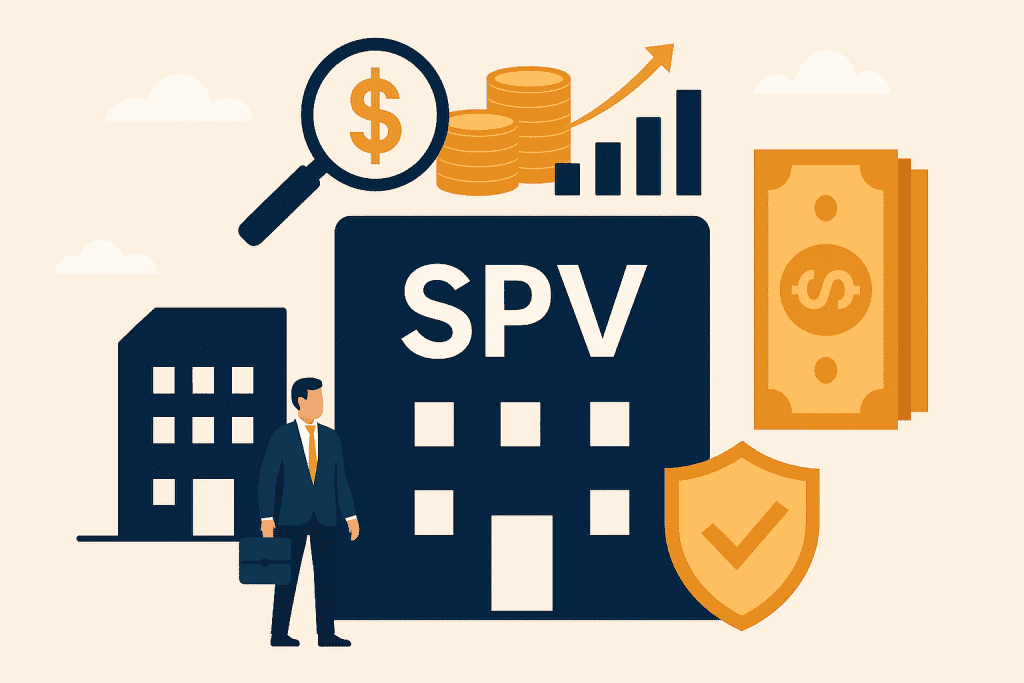
What Is a Special Purpose Vehicle (SPV)?
An SPV, or Special Purpose Vehicle, is its own legal company. People create it to reach a specific business or financial goal. It runs separately from its parent company. It has its own assets, debts, and legal identity. The main function of an SPV is to isolate financial and legal risks from the parent company.
SPVs can protect the parent company from the potential fallout of high-risk projects. If the project fails, the losses stay confined within the SPV. This separation builds investor trust. It also protects the parent company’s financial stability. Each SPV serves a specific purpose. It’s a focused tool used for targeted investments.
In the market, SPVs play a key role in structured finance. They also help with project funding and managing assets. SPVs also pool investor money into one entity. This setup improves efficiency and transparency. This mechanism ensures better governance and regulatory oversight in complex investments.
How Does an SPV Work?
An SPV is often set up as a Limited Liability Company (LLC), a Limited Partnership (LP), or a Trust. The choice depends on its goals and legal needs. The SPV may be fully owned by the parent company. It can also be set up as an independent “orphan” entity with no direct ownership ties. This structure helps protect it from bankruptcy risks.
In financial accounting, SPVs often operate off the parent company’s balance sheet. This accounting method helps limit financial risk. However, it demands strict compliance to avoid misuse. Investors examine the SPV’s and the parent company’s finances. This helps them judge overall stability and transparency.
Here’s how this works in practice: a company may create an SPV to manage a new venture or asset portfolio. The SPV raises capital separately, holds the asset, and assumes related liabilities. This setup keeps finances separate. It lets investors focus on performance without facing the parent company’s risks.
Why Companies and Investors Use SPVs
Companies create SPVs to isolate high-risk projects and manage debt securitization. Firms move specific assets or debts into an SPV. This protects their main operations and helps maintain strong credit ratings. This strategy also enhances risk distribution among investors participating in the SPV.
In venture capital and private equity, SPVs help investors work together. They combine their money to fund a specific project or startup. Instead of creating a large fund, investors put money into a single-purpose entity. This entity focuses on just one company. This makes participation easier and reduces administrative burdens.
From an Islamic finance perspective, SPVs also facilitate Shariah-compliant investments. SPVs are used in sukuk (Islamic bonds), real estate projects, and joint ventures. In these cases, asset ownership must follow ethical and Shariah rules. This allows investors to align faith-based principles with practical finance.
Types of SPVs and Their Uses
LLC SPVs
Limited Liability Company (LLC) SPVs are very common. Businesses and investors often use them in corporate and investment settings. They create a legal boundary between investors and the parent company. They also allow flexible control and management. In this model, members are only responsible for the money they invest. This limits their personal risk of loss.
LLC SPVs are often used in real estate and project financing. They work well when many investors are involved. The simple structure shows clear ownership shares. It also makes reporting easy, which attracts both local and international investors.
Limited Partnership (LP) SPVs
Limited Partnership SPVs have two roles. General partners manage the entity. Limited partners invest money but don’t take part in management. This structure is common in private equity and venture capital deals. Investors take a passive role, while managers handle operations and structure the deals.
The LP model allows flexible use of capital. It also lets profits be shared based on set agreements. The LP model works well with global investment rules. It supports cross-border deals and provides clear tax reporting.
Joint Venture (JV) SPVs
Joint Venture SPVs form when two or more groups work together on a project. Each partner adds assets, money, or skills. They share profits and losses based on their agreement. The SPV acts as a neutral platform. It ensures clear governance and financial transparency between the partners.
In business, JV SPVs are often used in energy, real estate, and infrastructure. These sectors rely on partnerships for large projects. They let partners work together without merging their businesses. Each partner keeps control and manages risk based on what they contribute.
Offshore and Shariah-Compliant SPVs
Offshore SPVs are often set up in places like Luxembourg or the Cayman Islands. These locations offer tax benefits and greater privacy. The UAE’s ADGM and DIFC provide strong local options. They meet regulatory rules and match GCC market standards.
For Shariah-compliant finance, SPVs are structured ethically to avoid interest and speculative elements. They support sukuk issuance, asset-backed financing, and Islamic investment funds. These SPVs follow local laws and faith-based investment rules.
Benefits of Using SPVs
SPVs offer several advantages to businesses and investors. First, they separate risk. This lets companies start new ventures without putting current assets at risk. This risk separation is especially helpful in unstable markets. It’s also useful for large projects like infrastructure or real estate.
They also simplify fundraising by consolidating investor capital into one entity. Investors receive clear ownership stakes, improving transparency and reducing administrative friction. SPVs enhance financial flexibility by enabling creative financing structures while preserving regulatory compliance.
From a tax and asset management perspective, SPVs can deliver efficiency. Some places, like ADGM, let SPVs use double taxation treaties. They also offer simple reporting rules. These features make them cost-effective and attractive for both local and international investors.
Risks and Challenges
While SPVs offer protection, they can also create transparency risks if misused. The Enron case demonstrated how off-balance-sheet entities may conceal debt and mislead investors. Proper oversight, audits, and disclosure are essential to prevent such misuse.
Another challenge lies in regulatory compliance. SPVs must adhere to accounting standards, beneficial ownership rules, and anti-money laundering frameworks. Not following the rules can put sponsors and investors at legal risk. It can also damage their reputation.
Under Shariah rules, SPVs must avoid interest, known as riba. They must also stay away from uncertainty, called gharar. Structuring errors can compromise compliance and investor trust. Shariah boards review SPV structures before giving approval. They check that the setup follows ethical and faith-based standards.
Setting Up an SPV in the UAE
The UAE has two main places to set up SPVs. These are the Abu Dhabi Global Market (ADGM) and the Dubai International Financial Centre (DIFC). Both offer transparent legal frameworks aligned with international corporate standards. They allow companies and investors to establish SPVs quickly through digital registration.
According to ADGM, SPVs must demonstrate a nexus to the UAE or GCC region. SPVs in the UAE can hold assets, shares, or property. They can also get UAE Tax Residency Certificates to use double tax treaty benefits. The total registration cost typically includes name reservation, company registration, and licensing fees.
In the market, ADGM SPVs are often used to hold assets. They’re also used to structure investments and manage family wealth. DIFC SPVs, meanwhile, cater to corporate and cross-border transactions. Both jurisdictions ensure simplified reporting, legal certainty, and investor protection.
SPVs and Shariah-Compliant Investing
SPVs have become increasingly relevant in Islamic finance. They help structure sukuk. In this setup, investors own part of the underlying assets instead of holding debt. This follows Shariah’s ban on riba. It also ensures profits are shared based on how real assets perform.
In real estate and project financing, SPVs support ethical investing. They hold physical assets with clear and transparent ownership. Shariah boards play a key role in approving these structures. They ensure the deals avoid interest and excessive uncertainty.
From an ethical investment viewpoint, SPVs also promote responsible governance. They separate funds for each purpose. This makes sure investor money is used in a clear and transparent way. This supports the UAE’s regulatory goals. It also follows Islamic finance principles that focus on fairness and accountability.
Strategic Insights for Investors
From an investor’s perspective, SPVs combine legal protection with operational flexibility. They allow capital deployment into specific assets while limiting exposure to unrelated risks. This makes them a useful tool for both institutional and individual investors. They help build diversified portfolios.
In the UAE, SPVs show how advanced the local capital markets have become. They reflect the growth and maturity of the financial system. More investors are using SPVs in sukuk, venture capital, and global projects. This shows a strong demand for secure and transparent setups. SPVs may continue to shape how ethical and sustainable finance evolves in the region.
For Shariah-conscious investors, due diligence remains essential. Reviewing the SPV’s ownership, governance, and asset structure ensures compliance and trustworthiness. When SPVs follow Islamic finance standards, they link faith with modern finance. They help investors follow ethical values while growing their capital.
FAQs
What is the main purpose of an SPV?
The main purpose of an SPV is to isolate financial and legal risks from a parent company. It lets firms and investors manage projects or assets on their own. At the same time, it ensures accountability and transparency.
How are SPVs regulated in the UAE?
SPVs in the UAE are primarily regulated under ADGM and DIFC jurisdictions. Both frameworks follow global corporate standards. They also make firms follow tax laws, reporting rules, and clear ownership standards.
Are SPVs used in Islamic finance?
Yes, SPVs are common in Islamic finance. They help structure sukuk, real estate deals, and asset-based projects. These follow Shariah rules by avoiding interest-based financing. They also promote ownership backed by real assets.
What risks should investors consider before using an SPV?
Investors should review transparency, legal compliance, and financial reporting. Misuse or weak oversight can lead to legal and reputational damage. Past failures like Enron show the risks clearly.