Volatility and the Modern Investor
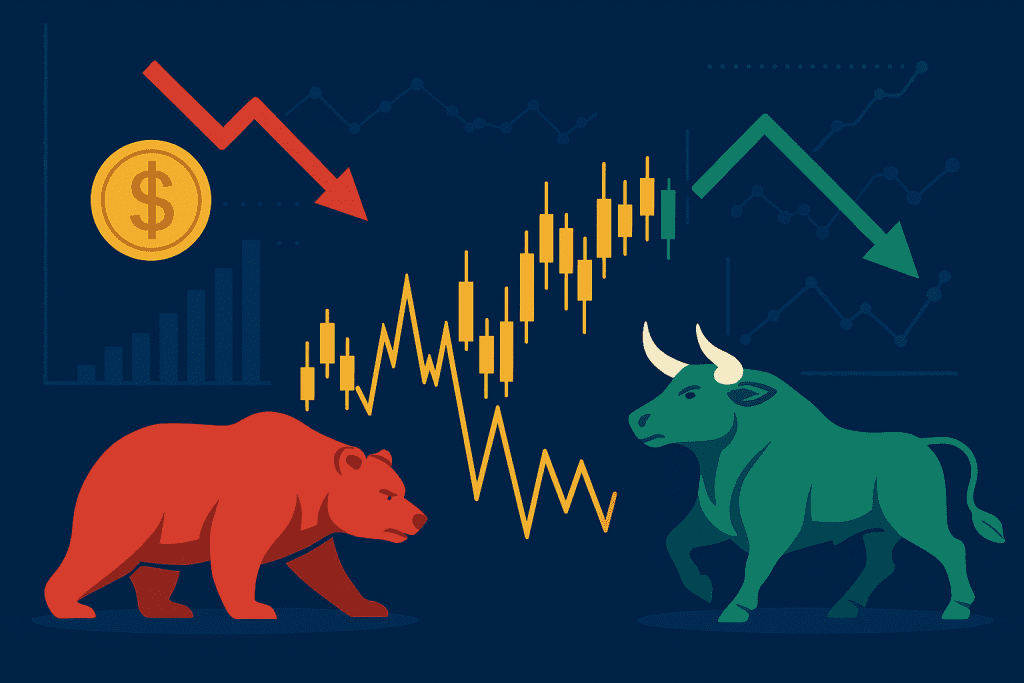
Volatility in finance refers to how much and how fast prices move. It measures the pace of price swings in assets such as stocks or commodities. High-volatility assets can experience large gains or losses within short periods, creating both opportunity and risk for investors.
From a market standpoint, volatility reflects uncertainty. When markets rise or fall sharply, traders see it as a sign of instability. For UAE investors, especially those following Shariah principles, managing this volatility is key to achieving ethical and sustainable portfolio growth.
Volatility meaning varies by asset class, but it always signals how sensitive a price is to market changes. High-volatility assets can test investor discipline but also open doors to value-driven entry points during market swings.
What Are High-Volatility Assets?
High-volatility assets are those whose prices fluctuate widely within short time frames. These swings are often due to changing demand, investor sentiment, or external economic shocks. A higher volatility rate indicates that an asset’s price moves more sharply from its average value.
A common example can be seen when tech stocks react quickly to earnings news. In contrast, sukuk or government bonds move slowly, showing low volatility. Crypto assets and emerging-market equities also display wide price spreads, reflecting investor uncertainty.
From an investor’s perspective, volatility does not equal risk but often correlates with it. A volatile stock may rise sharply yet drop just as fast, while a stable one offers gradual, predictable returns.
Measuring Volatility: From Statistics to Market Signals
Traders measure volatility using statistical tools such as standard deviation. It shows how much a price deviates from its average. The wider the range, the more volatile the asset. Analysts also track beta, which compares a stock’s movements to a broader market index like the S&P 500.
Another popular gauge is the VIX Index, often called the market’s fear gauge. It reflects expected volatility in U.S. equities over the next month. When the VIX rises, investors expect turbulence. Historical and implied volatility also help traders anticipate price behavior over time.
To put this in context, a sukuk fund may show low beta and steady returns, while a tech stock with a beta above 1.2 reacts sharply to market sentiment. Both can fit in a balanced portfolio if managed carefully.
What Causes Market Volatility?
Volatility often rises when uncertainty enters the market. Political events, such as elections or conflicts, can shake investor confidence. Inflation and interest rate changes also affect how investors value future earnings, increasing price movement.
From an economic standpoint, oil price shifts strongly influence Gulf markets. A sudden drop in crude prices can trigger volatility across energy-related assets. Company news, such as profit warnings or leadership changes, can also spark short-term market swings.
Investor behavior adds another layer. Fear and speculation often amplify reactions. When sentiment changes rapidly, volatility spreads across sectors, leading to broad market fluctuations.
High-Volatility Asset Classes
Cryptocurrencies
Cryptocurrencies are among the most volatile markets. Bitcoin and Ethereum can gain or lose double digits in days. Their volatility stems from low regulation, speculative trading, and limited intrinsic value. These assets are not currently Shariah-compliant due to uncertainty in valuation and governance.
Commodities
Oil, gold, and metals show high volatility driven by supply and demand shifts. Oil prices can move sharply after geopolitical events or production changes. For the UAE, these markets matter because energy exports tie closely to national revenue and investor sentiment.
Tech Stocks
Technology shares like those of Apple or Google often rise and fall based on innovation cycles and earnings results. Their prices can surge during product launches but also drop after weak performance data. High growth potential comes with rapid revaluation risk.
Emerging Markets
Emerging-market equities tend to move more dramatically due to currency exposure and liquidity constraints. For regional investors, these markets offer growth opportunities but require diversification to offset volatility-related risks.
How Investors Manage High Volatility
Diversification remains the most reliable approach to managing volatility. By spreading investments across various sectors and asset types, investors can cushion their portfolios from sharp price moves in any one area.
From a risk-adjusted investing standpoint, portfolios can balance stable assets like sukuk with modest exposure to equities. Shariah-compliant funds often apply this strategy, ensuring ethical diversification without exposure to prohibited industries.
Investors may also use systematic rebalancing, reviewing holdings periodically to align with long-term goals. This reduces emotional decision-making during volatile market phases.
Volatility and Investment Opportunities
High volatility can create opportunities for long-term investors. When prices drop quickly, quality assets may become undervalued. Investors with patience and discipline can view these moments as potential entry points for gradual accumulation.
From an ethical investing angle, volatility invites reflection rather than reaction. UAE investors who focus on fundamentals and avoid speculation align with Shariah principles of steady, informed decision-making.
Consistent with historical patterns, markets that experience sharp corrections often stabilize and recover over time. Staying invested during volatility can support long-term wealth building within a balanced strategy.
Shariah Viewpoint: Risk vs. Gharar
Islamic finance discourages excessive uncertainty, known as gharar. However, not all uncertainty is prohibited. Manageable market volatility differs from speculative behavior, which falls under maysir, or gambling.
From a compliance perspective, investing in volatile assets is permissible when decisions are informed, data-driven, and free from speculation. Holding positions based on fundamental analysis supports ethical wealth growth.
This distinction matters because volatility itself is neutral; only how it is handled determines compliance. Responsible investing balances reward potential with awareness of acceptable risk boundaries under Shariah law.
Navigating High-Volatility Markets Wisely
Volatility is an inevitable feature of all markets. Investors who understand its nature can use it to their advantage rather than fear it. Proper research, diversification, and patience form the foundation for resilient investing.
From a UAE perspective, integrating sukuk, equities, and commodities allows investors to balance performance with stability. Ethical diversification ensures compliance and long-term value preservation.
As many financial experts emphasize, volatility is not the enemy—ignorance is. Informed investors who understand market cycles are better prepared to navigate change with confidence and discipline.
FAQs
What does volatility mean in finance?
Volatility measures how much and how quickly an asset’s price moves. High volatility means larger price swings over short periods. Low volatility shows stable price behavior, reflecting less uncertainty.
Which assets are usually high-volatility?
Cryptocurrencies, commodities, tech stocks, and emerging-market equities are typical examples. Their prices fluctuate widely based on market sentiment and external events.
How do Shariah-compliant investors handle volatility?
They manage risk through diversification, holding assets like sukuk or halal funds that provide steady returns. This approach aligns with Islamic principles of avoiding excessive speculation.
Is volatility always negative for investors?
No. While it adds uncertainty, volatility can offer opportunities to buy quality assets at lower prices. It becomes risky only when investors react emotionally instead of strategically.